

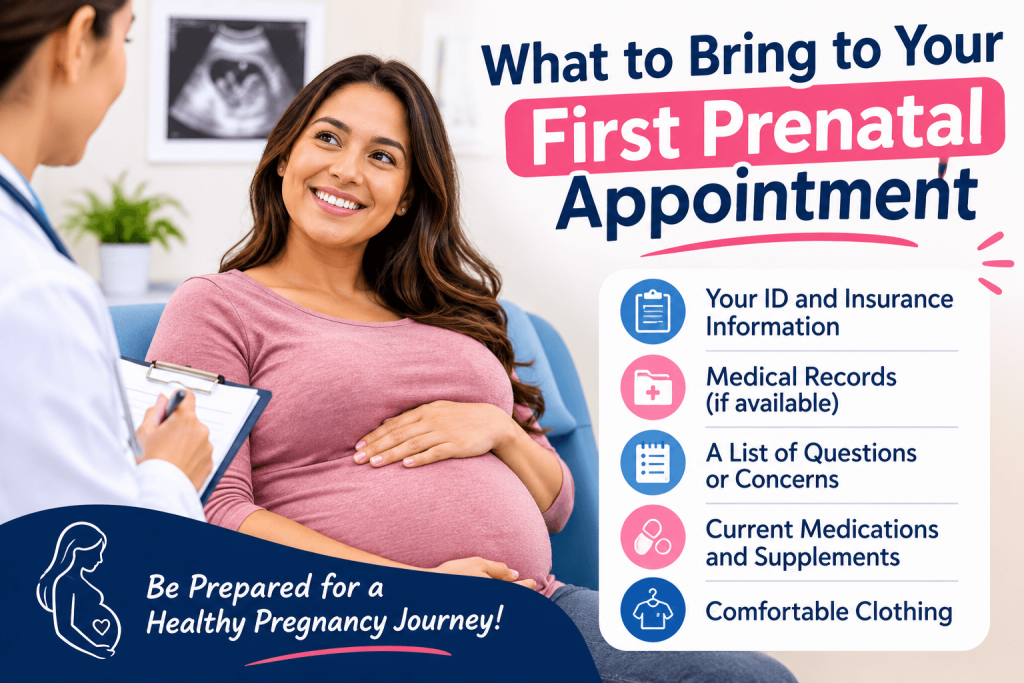
Your first prenatal appointment is usually one of the longest visits of the pregnancy. Bringing your insurance information, health history, medication list, and questions helps the OB-GYN or midwife team give personalized advice and saves time for what matters most.
Many practices schedule the first visit around eight to ten weeks of pregnancy, but timing varies. Here is a simple list to prepare.
Documents and Health Information
- 1. Photo ID and insurance card, plus any referral if your plan requires one.
- 2. A list of current medications, vitamins, and supplements, including doses.
- 3. The date of your last menstrual period, if you know it.
- 4. Your medical history, including past pregnancies, surgeries, and chronic conditions.
- 5. Family health history from both biological parents if available.
- 6. Vaccination records, if you have them.
Questions Worth Asking
Write questions down before the visit, since appointments can feel rushed. Common topics include which medications are safe to continue, nutrition and prenatal vitamins, exercise, symptoms that need urgent attention, and how to reach the practice after hours.
Ask about the schedule of future visits, recommended screenings, and which hospital or birth center the practice uses. If you see a team of providers, ask how care is shared among them.
Choosing a Practice That Fits
Consider location, office hours, after-hours support, hospital or birth center affiliations, and whether the practice includes physicians, midwives, or both. Ask how appointments are scheduled as the pregnancy progresses and how the practice communicates test results.
Insurance networks matter too, since prenatal care involves many visits and tests. Confirm coverage early to avoid unexpected bills later in the pregnancy.
Write down any symptoms you have noticed since the positive test, including nausea, cramping, or fatigue, so you can discuss them during the visit. Your notes help the visit go smoothly.
Practical Tips for the Day
Allow extra time for paperwork and lab work. Wear comfortable clothing and bring a support person if the practice allows it. Call the office before the visit if you have bleeding, severe pain, or other urgent symptoms, rather than waiting for the appointment.
Great Biz Dir’s women’s health and OB-GYN listings help expectant parents check insurance acceptance and hospital affiliations before booking. Comparing practices there can help you check insurance acceptance and hospital affiliations before booking.
Bring Your History, Leave With a Plan
A prepared first prenatal visit starts with ID, insurance, medication lists, health and family history, and written questions. Ask about screenings, safe medications, and after-hours contact, and call the office early for urgent symptoms. Great Biz Dir can help you compare women’s health practices nearby.
Frequently asked questions
Many practices schedule the first visit around eight to ten weeks of pregnancy, though timing varies by practice and health history. Call soon after a positive test to schedule. People with health conditions or symptoms may be seen earlier. Call the office if you have questions.
Do not stop prescribed medications without talking to a healthcare provider, since some conditions need ongoing treatment. Call the practice or your prescribing doctor to ask which medications are safe to continue until your appointment. Your provider can guide decisions safely.
Practices often perform a physical exam and order blood tests, urine tests, and screenings based on health history. Some include an early ultrasound. Ask the practice what to expect so you can plan time and any preparation needed. Ask about any preparation needed.
Many practices welcome a partner or support person, though policies vary. Ask when scheduling. A support person can help remember information and questions, especially during the first visit when there is a lot to discuss. Check the policy when booking.