

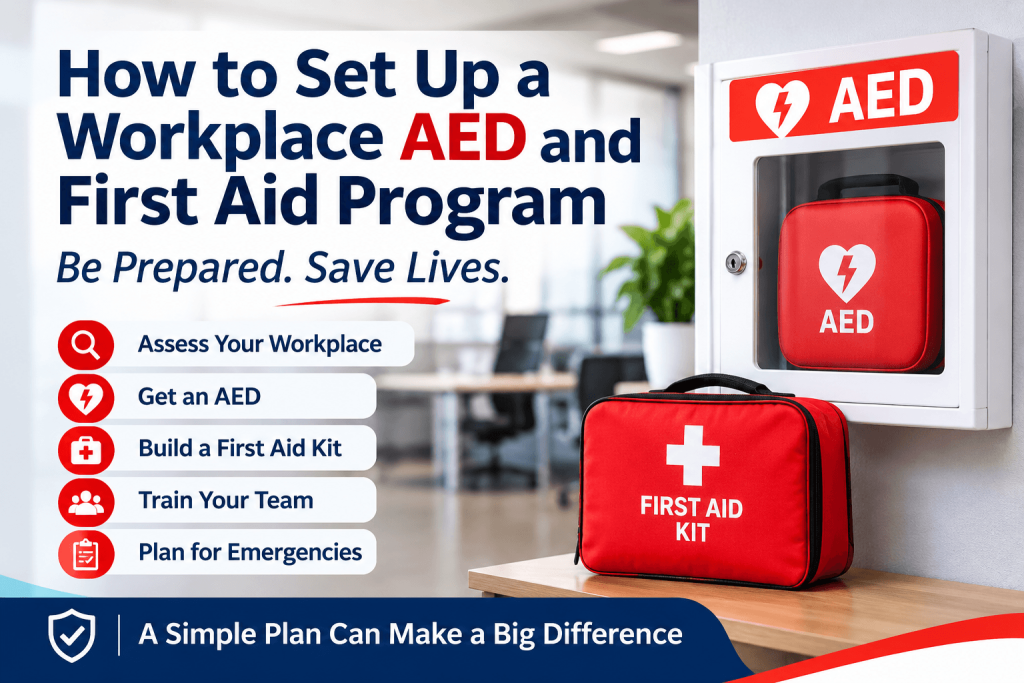
A workplace AED program includes more than buying a device. It covers choosing a visible location, training staff, checking batteries and pads on schedule, and knowing your state’s rules. Automated external defibrillators are designed for lay rescuers, but readiness depends on regular maintenance and practice.
First aid and safety supply companies help many businesses set up and maintain these programs. Here are the core steps.
Step 1: Plan Placement and Equipment
- Place AEDs where they can be reached quickly, often near main hallways, break rooms, or entrances.
- Use signage and a cabinet that is easy to open.
- Pair the AED with a stocked first aid kit suited to your workplace hazards.
- Consider multiple units for large buildings or campuses.
OSHA requires employers to provide medical and first aid resources appropriate to the workplace, including trained first aid personnel when emergency care is not reasonably close.
Step 2: Train and Prepare People
Offer CPR and AED training to employees, refreshed according to the training provider’s schedule. Post emergency instructions near the AED and practice drills so staff know who calls 911, who retrieves the AED, and who meets responders.
State laws vary on AED programs. Some address registration with local emergency services, medical oversight, or Good Samaritan protections for rescuers. Check your state’s requirements or ask your supplier for guidance.
Common AED Program Gaps
The most common gaps are expired pads, dead batteries, locked cabinets, and staff who do not know where the AED is located. Another is placing the only AED far from where most people work. Walk the building and time how long it takes to reach the AED from different areas.
Review the program after any staffing changes or office moves, and refresh training so new employees know the plan.
Ask your supplier to remind you of upcoming pad and battery expirations.
Step 3: Maintain the Program
Assign one person to check the AED status indicator regularly and track expiration dates for batteries and electrode pads. Replace pads after use and restock first aid kits monthly. Keep a simple log of checks and training dates.
Several suppliers in Great Biz Dir’s safety and first aid listings offer service plans that track expirations and ship replacement supplies automatically. Many offer service plans that track expirations and deliver replacement supplies automatically.
Ready Equipment Saves Time When It Matters
A strong AED program combines visible placement, trained staff, regular drills, and scheduled maintenance. Check state requirements, keep logs of inspections and training, and replace pads and batteries before they expire. Great Biz Dir can help you find suppliers who manage AED programs for workplaces.
Frequently asked questions
Requirements vary by state and industry. Some states require AEDs in places like schools, gyms, or certain public buildings, while many businesses install them voluntarily. Check your state's laws and industry rules, and ask your safety supplier for guidance. Ask your supplier about local rules.
AEDs are designed with voice prompts so bystanders can use them in an emergency, and many states have Good Samaritan protections for rescuers. Training still improves confidence and speed. Offer CPR and AED training to employees whenever possible. Practice drills improve confidence.
It depends on the manufacturer. Pads and batteries have expiration dates, often ranging from about two to five years, and pads must be replaced after use. Track dates in a log and check the device's status indicator regularly. Replace pads after every use.
Contents depend on workplace hazards and size. Many businesses follow the ANSI/ISEA Z308.1 standard for first aid kit contents. Restock regularly and add items for specific risks, such as burn supplies in kitchens or eye wash stations near chemicals. Match kit contents to your hazards.